
Shortness of breath can come from the lungs, heart, blood, or other causes, so it is not possible to identify the reason from the symptom alone. But if breathlessness is new, getting worse, or appearing during activities that used to feel comfortable, it deserves attention. Someone looking for a cardiologist in London for shortness of breath may need an assessment to check whether a heart problem could be contributing. If you are considering an assessment, read about what happens at a cardiology consultation.
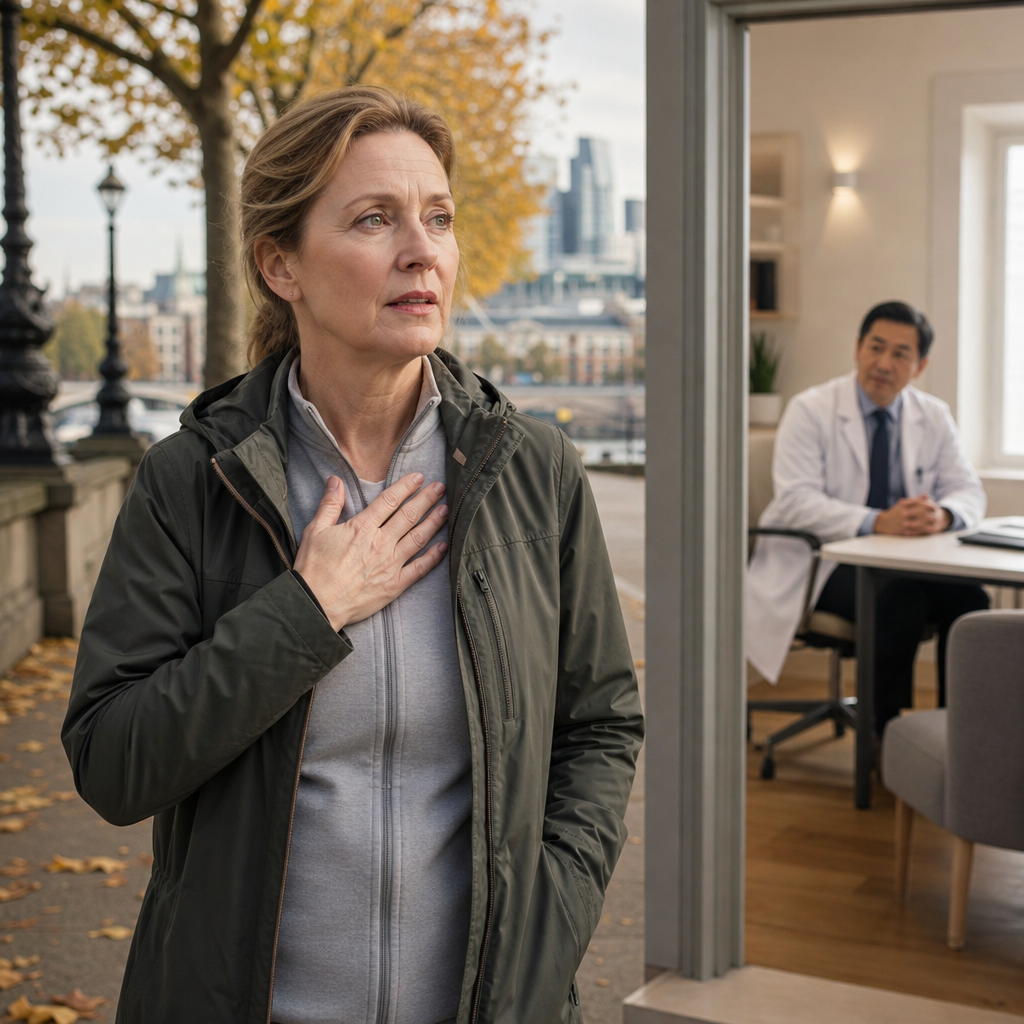
In October, changes in routine can make symptoms easier to notice: a brisk walk in cooler weather, carrying shopping, or climbing stairs after a quieter summer may leave you more breathless than expected. The season does not explain the symptom by itself. The important clues are how it began, what brings it on, whether it is progressing, and what other symptoms occur with it. Learn more about choosing the right cardiology test for your symptoms.
When can shortness of breath be heart-related?
The heart and lungs work together to deliver oxygen around the body. If the heart is not pumping effectively, has to work harder, or is affected by a rhythm or blood-flow problem, breathlessness can result. It may occur during exertion, when lying flat, or sometimes at rest. These patterns can help a clinician decide what to investigate, but they do not confirm a diagnosis. You can also find out what to expect from a private ECG and echocardiogram in London.
Possible heart-related causes include heart failure, coronary heart disease, an abnormal heart rhythm, and problems with heart valves. High blood pressure can also place extra strain on the heart over time. Breathlessness alone does not mean that any of these conditions is present; lung conditions, infections, anaemia, medication effects and other issues can cause similar symptoms.
Symptoms that should prompt a heart assessment
Arrange medical advice if breathlessness is persistent, recurring, unexplained, or worsening. A cardiology assessment may be appropriate when it:
- Appears with activity and is new, or occurs after less exertion than before.
- Occurs alongside chest pressure, tightness, discomfort, or pain, particularly during exertion.
- Comes with palpitations, an unusually fast or irregular heartbeat, dizziness, or near-fainting.
- Is worse when lying flat, wakes you from sleep, or comes with swelling in the ankles or legs.
- Limits everyday activities or is accompanied by unusual tiredness.
These signs are not proof of a heart condition, and some may have non-cardiac explanations. Their value is that they help a healthcare professional judge how urgently you need assessment and which tests may be useful. Make a note of when symptoms happen, how long they last, what you were doing, and whether anything else occurred at the same time.
When is shortness of breath an emergency?
Call 999 now for severe or sudden breathing difficulty, especially if it occurs with chest pain or pressure, collapse, fainting, confusion, or blue or grey lips or skin. Do not drive yourself to hospital. If symptoms are less severe but are getting worse, seek prompt medical advice rather than waiting for a routine appointment. In the UK, NHS 111 can advise on urgent care when you are unsure what service to contact.
If breathlessness is mild and stable, contact your GP or a relevant clinician for advice, particularly if it is new or unexplained. Do not use an online article to rule out a serious cause or delay emergency care.
What happens at a cardiology consultation?
A cardiologist will usually start by asking about your symptoms, medical history, medicines and family history. They may ask whether breathlessness occurs at rest or with exertion, how quickly it developed, and whether you have chest discomfort, palpitations, ankle swelling, cough, or difficulty lying flat. A physical examination and review of previous results can help shape the next steps.
Tests are selected according to your symptoms and findings; not everyone needs every investigation. Depending on the situation, assessment may include:
- An ECG: a recording of the heart’s electrical activity. A standard ECG offers a snapshot, so it may not capture an intermittent rhythm problem.
- An echocardiogram: an ultrasound scan that assesses the heart’s structure and pumping function.
- Ambulatory ECG monitoring: a wearable recorder used to look for rhythm changes over a longer period when symptoms are intermittent.
- Exercise or other functional testing: considered when exertion-related symptoms need further assessment and the test is appropriate.
- Blood tests or imaging: arranged where the history and examination suggest they may help investigate cardiac or other causes.
Some people will also need assessment by another specialist, such as a respiratory clinician, or coordination with their GP. A careful evaluation matters because treating breathlessness without identifying its cause may miss the problem that needs attention.
What if coronary heart disease is suspected?
Coronary heart disease occurs when the blood supply to the heart muscle is affected by narrowing in the coronary arteries. It can cause chest discomfort or breathlessness, often during exertion, although symptoms vary. A cardiologist may recommend further tests if the history suggests that reduced blood flow could be involved.
Treatment depends on the diagnosis and the individual. It may involve changes to risk factors, medication, or a procedure. Angioplasty and stenting are interventional treatments used in selected cases of coronary artery narrowing; they are not a general treatment for every cause of breathlessness. The decision requires specialist assessment and discussion of the expected benefits and risks.
Preparing for an appointment in London or Harefield
Dr. Chabok provides cardiology consultations, diagnosis and treatment, including heart investigations and interventional procedures such as angioplasty and stenting. The website lists clinics in London and Harefield. When arranging an appointment, explain that breathlessness is the reason for seeking advice and describe whether it is new, worsening, or linked to exertion. If you have urgent warning signs, seek urgent care instead of waiting for a clinic visit.
Before a non-emergency consultation, it can help to bring a current medication list, relevant test results, and a short record of symptoms. Note the activity that triggered them, how long they lasted, and whether resting helped. Do not stop prescribed medicines or deliberately provoke symptoms to gather information. If your symptoms change while waiting, contact your GP or urgent care service for advice.
A practical takeaway for autumn
Cooler days and a return to more walking may make changes in exercise tolerance more noticeable, but the calendar cannot tell you whether breathlessness is cardiac. Pay attention to a pattern that is new, progressive, or accompanied by chest discomfort, palpitations, faintness, or swelling. Seek emergency help for severe or sudden symptoms. For persistent or unexplained breathlessness, speak with a healthcare professional about the right assessment; a cardiologist can investigate whether the heart is part of the picture.
Frequently Asked Questions
Can shortness of breath be the only sign of a heart problem?
Yes. Breathlessness can occur without obvious chest pain, but it also has many non-cardiac causes. New or worsening symptoms should be assessed rather than self-diagnosed.
Should I see a cardiologist for breathlessness when walking?
Consider medical advice if breathlessness during walking is new, worsening, or happening with less effort than before. A clinician can assess whether a cardiology referral or other investigation is appropriate.
What heart tests might be used to investigate breathlessness?
Depending on your symptoms, assessment may include an ECG, echocardiogram, rhythm monitoring, exercise testing, blood tests, or imaging. Your clinician will select tests based on your individual circumstances.
When should I call 999 for shortness of breath?
Call 999 for severe or sudden breathing difficulty, especially with chest pain or pressure, fainting, collapse, confusion, or blue or grey lips or skin. Do not drive yourself.
Does breathlessness mean I need an angioplasty or stent?
No. Breathlessness has many possible causes, and angioplasty or stenting is considered only for selected people with diagnosed coronary artery narrowing. A specialist assessment is needed to decide on appropriate treatment.
Can I book a cardiology consultation in London or Harefield?
Dr. Chabok’s website lists cardiology clinics in London and Harefield. Contact the practice for current appointment and clinic information. Seek urgent care rather than waiting if symptoms are severe or rapidly worsening.
Frequently Asked Questions
Can shortness of breath be the only sign of a heart problem?
Yes. Breathlessness can occur without obvious chest pain, but it also has many non-cardiac causes. New or worsening symptoms should be assessed rather than self-diagnosed.
Should I see a cardiologist for breathlessness when walking?
Consider medical advice if breathlessness during walking is new, worsening, or happening with less effort than before. A clinician can assess whether a cardiology referral or other investigation is appropriate.
What heart tests might be used to investigate breathlessness?
Depending on your symptoms, assessment may include an ECG, echocardiogram, rhythm monitoring, exercise testing, blood tests, or imaging. Your clinician will select tests based on your individual circumstances.
When should I call 999 for shortness of breath?
Call 999 for severe or sudden breathing difficulty, especially with chest pain or pressure, fainting, collapse, confusion, or blue or grey lips or skin. Do not drive yourself.
Does breathlessness mean I need an angioplasty or stent?
No. Breathlessness has many possible causes, and angioplasty or stenting is considered only for selected people with diagnosed coronary artery narrowing. A specialist assessment is needed to decide on appropriate treatment.
Can I book a cardiology consultation in London or Harefield?
Dr. Chabok’s website lists cardiology clinics in London and Harefield. Contact the practice for current appointment and clinic information. Seek urgent care rather than waiting if symptoms are severe or rapidly worsening.